We are the Axel with Wings translation team, made up of fans of Yuzuru Hanyu. We hope to share videos of him and Japanese figure skating content with more people around the world. We aim to do our best to accurately capture the spirit of what's said. Hope you enjoy our videos and other contents.
Translation: @axelsandwich Proofreading: @yuzueco Raw Video: BBI by @aoyuzu205 Transcript: @moonright_yuzu Sub: @yuzuru_fairy
This is a 3 part video series. The interview was conducted right after Japanese Nationals in December 2019 but the program was aired in February 2020.
*A note on names: The title of the show is 羽生とゆづる (‘Hanyu and Yuzuru’) and you will see the narrator say that we are getting to know はにゅうゆづる for the first time. This nuance is hard to convey because it doesn’t exist in English but the name is written not in formal kanji (羽生結弦) which is how Yuzuru is known but in hiragana, the ‘easiest’ form of the Japanese alphabet, how children and Yuzu would have first learned to write their name before learning kanji. The feeling is that we are seeing a more personal, ‘private-facing’ and vulnerable side to him. For the sake of translation, the hiragana version will be written ‘Hanyu Yuzuru’ (the Japanese name order) to distinguish the two.
[!!!] Please do not edit or re-upload. If you would like to share our contents, credit or link to the official account, thank you
A: Well, it was the first day of practice so well, I [did so] while properly confirming my senses/feeling [for the rink/competition]. Well, I don’t think the skating itself has exactly come but I am confirming these one at a time. I skated today’s practice while thinking anew about the best way to get a feel for the ice.
Q: Was it a good feeling to skate to Ballade No. 1?
A: Well, I can only say I will leave that to the impressions of people watching in the audience, but well, I was really nervous today. But I felt again…well, apart from Pyeongchang, it was my first time running through Ballade No. 1 in front of everyone so while being very nervous, I felt like I was once more preparing myself to skate to this program.
Q: What was your reason for changing the programs?
A: Um, I think just with this question, the interview will probably be over. Firstly, at the Grand Prix Final and Japanese Nationals, I think it’s very fun to raise the difficulty [of my layouts], and the happiness at the moment of accomplishing them is immeasurable, but, well… I think the skating I’m aspiring to is not just doing difficult things.
I did Origin, did Otonal, but perhaps it’s not something that fits my rhythm/pace. Firstly, when it comes to technical things, the more I put in difficult elements, the more I neglect the portions of my own skating, and something I hate is separating my mind from the music because I must do so to set up for jumps. A big [factor/reason for the change] was not being able to tolerate that. And also, in terms of music, I selected those pieces Origin and Otonal after the Olympics had finished, when I myself was in a very ambivalent/floating mood, feeling like I was constantly that young boy who was always chasing after Johnny Weir and Plushenko.
Therefore, I think it’s indeed true that the Otonal at Japanese Nationals was good and Skate Canada’s Origin was good but, after all, I was thinking that I could not perfect them as my own performance. Because the ideal was that hard to reach. That ‘ideal’ was probably not me, but I think that of Plushenko-san and Johnny-san’s shadows*. Therefore, when I thought of it, this was not my skating and thought this once more when performing Seimei during Medallist on Ice. When I skated Seimei…well, it’s not really about a cover and original song but I really felt a difference similar to that within myself. Truthfully, Seimei and Ballade No. 1 are kids who, as legend-like records** to be passed down, so if I had been able to, I wanted to let them sleep. But, even so, during Medallist on Ice, when I borrowed their power – and maybe it was because of my mentality at the time – I thought I was able to be myself to a staggering degree. So, yes, for a little while longer, I thought it was okay to borrow the power of these kids, yes.
*literally he says their ‘backs’ were the ideal, essentially the ‘backs’ who he was chasing after or their idealised image in his head, but I’ve taken the liberty to use a more common English expression.
**he uses しまっている which is a suffix usually used to denote something that’s not ideal/good – here it’s attached to 記録を持ってしまっている – holding the records. Our interpretation is that he’s saying it’s almost a bad thing that they have those records because it gives these programs a particular weight because of their ‘legendary’ reputation that he doesn’t want to risk/harm by performing them again.
Q: What’s the degree of completion for your 4A, will you fight with it at the World Championships?
A: U~m… well, if I can’t jump it then I cannot put it in, though I’ll do it if I can. I think I was indeed able to practice it during this month-long period. I haven’t landed it, but somehow or another, I think its condition/shape has gotten better.
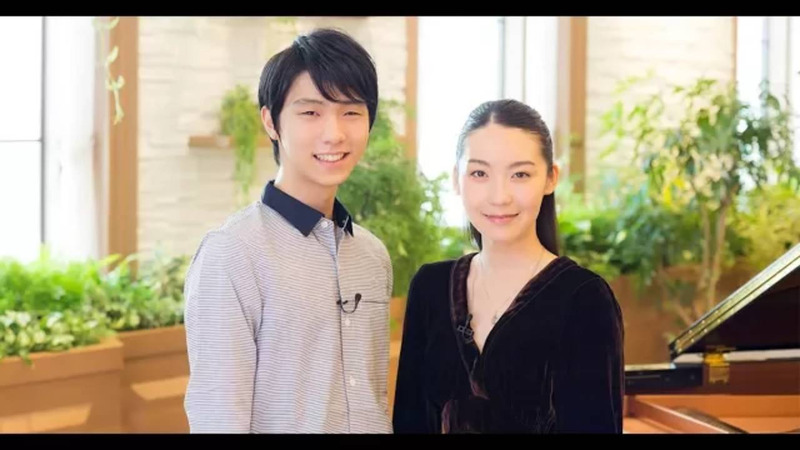
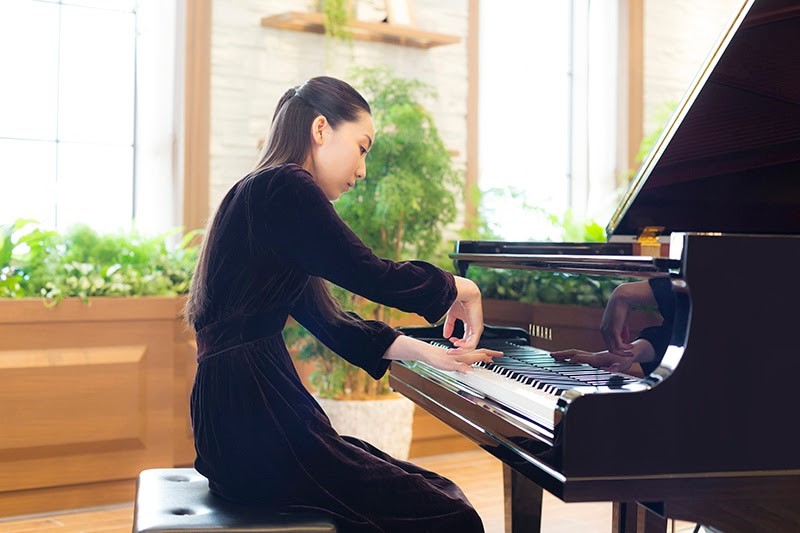
A beautiful and powerful melody sounded somewhere around Tokyo. Chopin Ballade No. 1. The performer is Ms. Kanon Matsuda. Moving to Moscow at the age of 6, she is the most noted young pianist who has studied at the Moscow Conservatory since 2014 as the first Japanese to receive the Russian government special scholarship.
Off to the side, behind Ms. Matsuda, a young man leans, with closed eyes, sometimes following the rhythm of the music with his body. The man is Yuzuru Hanyu, a figure skater who performs to this song for his short program in the 2017-2018 season.
It was a breathtaking performance for all who witnessed it. After the performance, when Ms. Matsuda got up and bowed to Hanyu, he asked the cameraman to stop filming.
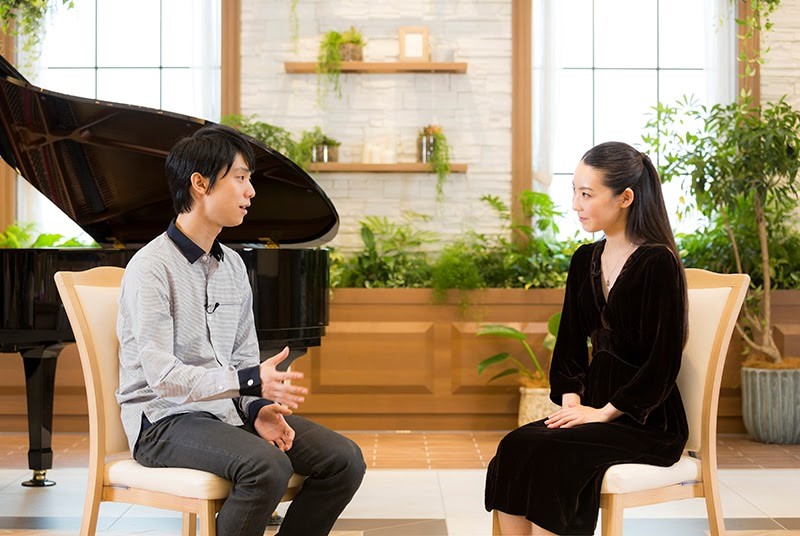
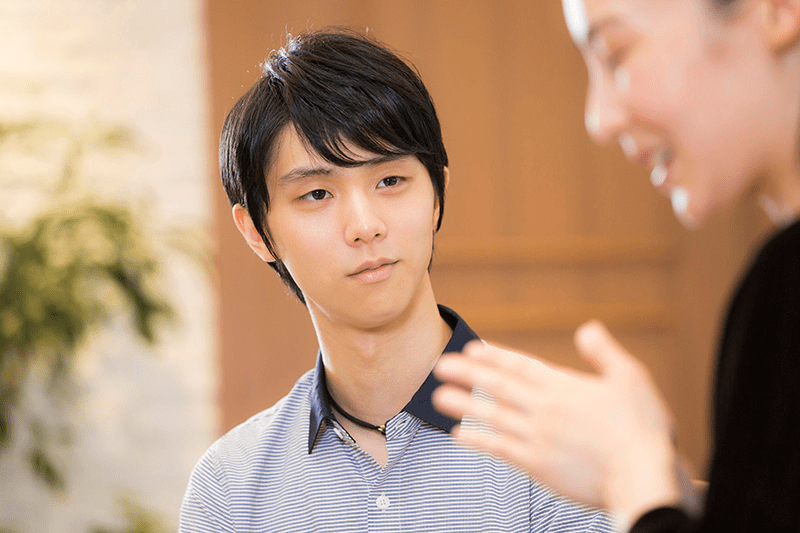
Hanyu wiped the sweat off his neck with a handkerchief, took a sip of his drink and took a breath. Then he returned to Ms. Matsuda. Art and sports: the two young talents began to discuss “expression”.
H: Yuzuru Hanyu, M: Kanon Matsuda
2人にとって、ショパン『バラード第1番』とは? For these two, what is Chopin's Ballade No. 1?
羽生:素晴らしい演奏でした。こういうピアノで滑ってみたいなって思えるような。
H:It was a wonderful performance. I'd like to skate to such piano music.
松田:ありがとうございます。
M:Thank you very much!
羽生:このショパンの『バラード第1番』にはどんな思い入れがありますか?
H: What does Ballade No. 1 mean to you?
Kanon Matsuda
松田: 私の出身地である香川県で開催されたリサイタルで演奏しました。その後にデビューCD(『松田華音デビュー・リサイタル』)に収録されることが決まったので、思い出の曲です。

M: I played this song at a recital in Kagawa Prefecture, where I'm from. After that, it was decided that it would be included in my debut CD (Matsuda Kanon Debut Recital). So, it is a good memory for me.
羽生:実はそのCDを、昨日ずーっと聴かせていただいていたんです。
H: Actually, I was listening to that CD all day yesterday.
松田:そうなんですか! ありがとうございます。
M: Really? I'm so happy to hear that!
羽生:松田さんは楽曲を物語のように解釈しているとお聞きしましたが、この曲にはどんな物語がありますか?

H: I heard that you interpret songs like stories. What kind of story do you think this song has?
松田: 毎回違った物語を考えるようにしているんですけれど、今回はゴールズワージーの小説『フォーサイト家物語』に出てくるソームズとイレン(アイリーン)の関係、ソームズがイレンを想う気持ちを音楽にしてみようかなって考えてみたんです。


M: I try to think of different stories each time. But this time, I was trying to think about the relationship between Soames and Irene in the Forsyte Saga by Galsworthy, and try to include Soames's feelings for Irene in the music.
羽生:すごいなあ、本をよく読まれるんですね。
H: Wow! That is really impressive! Do you read a lot?
Yuzuru Hanyu x Kanon Matsuda
松田:はい、好きなんです。
M: I do. I love reading.
羽生:僕にとってこの『バラード第1番』は、もちろん曲についても思い入れは強くあるんですけれど、なんて言うんだろうな、割と自分でいられる。自分自身が曲と同化できるように思います。

H: For me, about this Ballade No. 1 - of course, I have strong feelings. How can I explain: I can be myself. I feel like I can assimilate myself into this song.
松田: なるほど。
M: I see.
羽生:自分の中で「これを伝えたい」「あれを伝えたい」って演技する前から持っているわけじゃなくて、やってる最中に何かが出来上がっている。

H: I don't own it before I perform it, like "I want to express this" or "I want to express that". Within myself, something is being completed while I'm actually performing it.
松田:素晴らしい。
M: That's amazing!
羽生:松田さんの演奏している姿を見て思ったのは、力の入れ方とか息の抜き方とか呼吸とかをすごい大事にしているなあって。スケートを滑っている感覚と似ているのかなって思いました。ですから演奏を聴いて、こういうものを作らなくちゃいけないんだなあと、学ばせていただきました。

H: When I watched you perform, I thought that you place importance on the way you exert force, breathing out and breathing in. Maybe that is similar to the feeling of skating. So, listening to your performance, I’ve learned that I have to do something like that, too.
Yuzuru Hanyu
松田:すごく嬉しいです。ありがとうございます。私はモスクワの自宅のテレビでソチオリンピックをずっと見ていました。フィギュアスケートは他のスポーツと違って、音楽を聴いて感じたものをさらに体で表現する芸術的な競技ですよね。羽生選手のス
ケートからは情熱というか、エネルギーがすごく伝わってきます。

M: I'm so happy to hear that. Thank you very much. I watched the Sochi Olympics on TV at home in Moscow. Unlike other sports, figure skating is an artistic competition that further expresses what you feel listening to music. From your skating, I feel passion and a lot of energy is transmitted.
演奏・演技を通して観客に伝えたいことWhat do you wish to convey to the audience through your performances?
羽生:先ほど「毎回違った物語を考える」とおっしゃいましたが、それは同じ曲でも演奏のたびに違うということ?

H: As you mentioned earlier, "to think of a different story each time". But does it mean that you do so each time you perform, even for the same song?
松田:ええ。同じことを考えようと思っても、なかなかできないですから。雨が降っていたら「あ、雨がいいな」ってちょっと悲しい気持ちで弾いてみたり、または希望を感じる気持ちで弾いてみたり。

M: Yes. Even if I try to think the same as before, I can't do it easily. If it's raining: "Oh, it's rainy" and I try to play with a slightly sad feeling, or try to play with the feeling of hope.
羽生:ステージに入る前から物語を決めているんですか?
H: Do you decide on the story before going onstage?
松田:はい。全体は決めています。ただ、よりキャラクターをはっきり出したい場所だけは、ステージに上がる直前まで頭の中でグルグルグルグルと考えていることもありますね。

M: Yes. I decide it vaguely. However, if there's a character I clearly want to convey, I go over and over it in my head until just before I go onstage.
羽生:でもピアノのクラシックって結構キャラが決まってないことが多いじゃないですか。その日の天気とか会場の雰囲気とか(の影響が)すごくありますよね。

H: But there are many cases where classical piano music doesn't have a concrete character. There is a lot of influence from the outside weather or the atmosphere in the venue, isn't there?
松田 うんうん、そうなんです。
M: Yes. Exactly.
羽生:そういう人間性みたいなもの、今まで経験してきたこととか、今の自分の思いの背景とか、そういうものを松田さんは表現されているんだなあって思いました。

H: I thought that you are expressing things such as human nature, things that you've experienced so far and the background of your current thoughts .

松田:フィギュアスケートはどうなんですか?
M: How is it in figure skating?
羽生:音を出している感覚に近いのかなって思います。もちろん曲はできているから、無から自分で作り出すものじゃないですけど、でも僕は「この人、曲に合わせて滑ってるのとは違うんだ」ということを感じてもらいたいなと思っているんです。

H: I think it's close to the sensation of producing sounds. Of course, the song exists already, it is not something you create yourself, but I hope people will feel: "This person is not just skating along with the song".
Yuzuru Hanyu
松田:ええ、ええ。自分自身で意味を、一歩一歩に意味を入れるっていう感じですか?
M: I see. I see. You mean putting your own meaning into the song?
Something like putting meaning into every step?

羽生:入れるというより、なんか「入ってる」感じ。聴いている人も見ている人も、そして滑っている自分も、結局みんな違う過去、違う経験があると思うんです。例えば悲しい曲でも、自分自身の近くに悲しいことがあったらすごい悲しくなるし、直前に楽しいことがあってウキウキした状態だったら感じ方が違うと思うし、悲しみの後にやってくる希望のようなものが見えたりすることもあるかもしれないし。僕はそういうのをすごく大事にしたいなって思っていて。だから自分の伝えたいことはたくさんあるけれど、見ている方それぞれに「何か」が伝わっていればいいなあ、って思っています。

H: Instead of "putting", it's more like "entering". Everyone who's listening and watching, and even me who’s skating, all have different pasts, different experiences. For example, a sad song -if you experienced something sad recently, will make you feel extremely sad,but if you've just had fun and are feeling excited, the way you feel it will be different. You may be able to see something like hope comes after sorrow. I really want to pay attention to those kind of things. There are many things I want to convey, but I want to convey a different "something" to every person watching.

松田 その感覚、素晴らしいと思います。
M: I think that sense you have is wonderful.
Yuzuru HanyuYuzuru Hanyu x Kanon Matsuda
楽曲に対して情熱を注げるか、深みを追求できるか
Do you embrace passion in music or pursue depth?松田:羽生選手は美しさや表現力について、どのようにお考えですか?
M: What do you think about beauty and the ability to express it?
羽生:フィギュアスケートは技術的なことがすごく目立つ競技です。レベルの高いプログラムで、ジャンプなどをすべてきれいに決められれば、それが究極。
H: Figure skating is explicitly technical. The ultimate goal is to land all your jump and other elements cleanly in a high-level program.
その中で、「これを伝えよう」「あれを伝えよう」とやりすぎると、ぐちゃぐちゃになっちゃってミスも増えて、最終的に伝わらないことが多いかなと思います。自分の気持ちだってぐちゃぐちゃになっちゃうし。
Within that framework, if you think too much about "Let's tell this" or "Let's tell that", you will mess up, make more mistakes and, in my opinion, end up not conveying what you want. And it messes up my feelings, too.
松田さんは思いどおりにいかない時ってどうしますか?
How about you? What do you do when the situation doesn’t line up with your expectations?
Yuzuru Hanyu
松田:コンサートや演奏会で弾いていて、「ここ思いどおりにいかなかったな」ということは必ずあります。でも私はやっぱり、音。出す音のことを考えないといけないので、技術より曲のイメージや、伝えたいメッセージを考えています。

M: There's no doubt that "Things did not go as I expected" moments happen during concerts and recitals. But, for me, the sound is the ultimate. I have to consider the quality of the sound, so I think more about the images of the songs and the messages I would like to give rather than the technical aspects.

羽生:例えば、演奏途中で音が1個飛んだりしても、その場で完全に忘れ去ってるんですか?
H: For example, even if one note eludes you while you are playing, do you completely forget about it after that moment?

松田:忘れ去ってますね(笑)。シャットアウトしないとまた同じことを繰り返す可能性があったり、音楽が止まってしまったり……。
M: Yes, it completely disappears after that moment! [laughs]
If you don't shut out that mistake, you could make the same mistake again, and then the music itself would stop.

イメージを、ストーリーを続けていかないと曲が続いていかないので、ミスのことは忘れます。実際、演奏した後「今日間違ってたよね」って言われても「そうだったっけ?」って思うことがあります。
You need to keep playing the images and stories, otherwise, the song doesn't continue. So, I sweep away the mistakes.
And, in fact, if someone points it out - "You made mistakes today, didn't you?", there are times I wonder, "Did I?"

羽生:僕もジャンプとかでミスったことを忘れてる時が結構あります。
H: Yeah, there are also times when I forget mistakes in my jumps, etc.
Kanon Matsuda x Yuzuru Hanyu
松田:羽生選手は、曲選びはどうなさってるんですか?
M: How do you choose the songs for your programs?

羽生:フリーに関しては、最近5〜6年は自分で選曲しています。その基準は自分がそのプログラムに対してどれだけ興味を持っているか。その曲だけで1年2年ぐらい滑らなきゃいけなくて、毎日滑っているからやっぱり聞き飽きてきたりもしちゃう。情熱を注げるか注げないかってすごく大きいんです。

H: For my free skate, I've chosen the songs myself for the past 5-6 years.The standard I follow is how much interest I have in the program. I'll be skating that program everyday for a year or two, so there will definitely be times that I'll get tired of listening to the song. It is a huge deal whether I can be passionate about the song or not.

だから“深み”がないと追求しきれない。でもフィギュアスケートの場合、曲が難しすぎると、見ている方々は「ああ難しいな」で終わっちゃう。
So, you can't pursue a song without "depth". But, in the case of figure skating, if the song is too difficult, people watching will end up thinking, "Oh, it’s difficult."

松田:うんうんうん。そうですね。
M: I understand what you're saying.

羽生:だからそれはすごく注意します。どういう曲がみなさんに伝わりやすいのか、自分の伝えようと思えるものが伝わるか。
H: That's why I pay a lot of attention to what kind of songs are easy to convey to people and easy for me to use to express what I want to express.

松田:すごいです。でも難しい。私の場合リサイタルだと1時間半弾いてなければならないので、体力が持つかどうかも計算して。ゆっくりな曲ばっかりだと体力的には楽ですが、聴いている人はつまらないじゃないですか。

M: Amazing! But that is a difficult thing. In my case, I have to play for an hour and a half for a recital, so I also have to calculate whether I'll have the physical strength or not. Physically, it's easier for me to only play slow music, but the people listening will get bored of that, right?
支えがあるから、夢に向かってがんばれる
Because of the support, we can try our best to achieve our dreams.羽生:松田さんは6歳からモスクワでピアノを学んでいて、今はロシア政府の特別奨学生としてモスクワ音楽院に在籍しているんですよね。
H: You have studied piano in Moscow since you were 6 years old and now you're enrolled in the Moscow Conservatory as a special scholar of the Russian government, right?
ロシアの芸術の分野は、若い才能を育てる文化みたいなものがあるんですか。
Does the Russian art sector cultivate young talent?
松田:はい。ロシアは芸術を支える仕組みがしっかりしていると感じます。
M: Yes. And I think Russia has a solid support mechanism for the arts.
私が卒業したグネーシン音楽学校は、基本的には全員、学費が全額免除でした。ただし、常に厳しい試験があって、基準にふさわしくない人は翌年から学費がかかったり、合格点をとれないと退学処分になったりします。
Basically, at the music school from which I graduated, all students are exempt from tuition.
However, there are strict exams. Those who don't meet the standards will be charged tuition the following year or will be expelled unless they can pass.
厳しいですが、そういうシステムは素晴らしいと思います。現在のモスクワ音楽院は、ロシア人のトップ40人は学費が全額免除です。私は外国人枠でなく現地ロシア人と同じ試験を受けて政府特別奨学生に選んでいただきました。
It's tough, but I think the system's great. Currently, at the Moscow Conservatory, the top 40 Russian students are exempt from tuition fees.
I took the same exams as the local Russians, unlike foreigners, and was selected to be a special government scholar.
羽生:すごいですね。僕もJSCトップアスリートとして、スポーツくじ(toto・BIG)の収益による助成により支えられています。
H: That's so impressive! I'm also supported by subsidies sponsored by the revenue of a sports lottery (toto BIG) as a JSC top athlete.
スケートはすごくお金のかかるスポーツなので、このような助成の仕組み、そしてたくさんのファンの応援に力をもらいながら夢に向かってがんばっています。
Skating is a very costly sport, so with this subsidy mechanism and the power gained through the support of my fans, I'm striving towards my dreams.
松田:私も皆さんに支えて頂いていることに感謝しながら、これからもがんばっていこうと思います。
M: I'm grateful to everyone for supporting me. I think I will try my best in the future as well.
一つひとつの動き、音。全てに意味をこめる
Each movement, a sound. Adding meaning to everything羽生:松田さんは6歳からずっとモスクワで暮らしてるんですよね。現地でのスケート人気はどうですか?
H: You've been living in Moscow since you were 6 years old, haven't you? How is the popularity of skating there?
松田:はい、大人気です。モスクワ市内にはスケートリンクがたくさんあって、赤の広場も冬にはリンクができます。
M: I have. Figure skating is very popular.
There are many skating rinks in Moscow. There’s a rink at Red Square in the winter as well.
ですから選手を応援するのはもちろん、大勢の市民が日常的にスケートを楽しむ環境にあります。
So it's an environment where many citizens enjoy skating on a daily basis, as well as supporting skaters.
私も時々「滑ろうよ」と誘われるんですが、ケガをすると演奏に影響が出るのでやったことはないんですけど。
I've also been asked, "Let's go skate", but, if I get injured, my performance will be affected, so I've never gone skating unfortunately.
羽生:僕はロシアの振付師の方にも教わったことがあるんです。その時に教わったのは、メリハリだったり力強さだったり、呼吸の使い方、体の動かし方とかなんです。
H: I've been taught by Russian choreographers in the past. What I was taught was sharpness and power, as well as how to use breathing, how to move my body, things like that.
そして今日、松田さんの演奏にもそれがすごく出ていて、共感するところがありました。松田さんにとって、ロシアで培ってきて「これが一番ためになった」というものは何ですか?
And today, I got the same sense from your performance. I felt empathy.
What was the most beneficial thing you’ve cultivated in Russia?
松田:グネーシン音楽学校のエレーナ・イワノーワ先生が、12年間学んでいた私にずーっと言ってくださっていたことがあります。
M: Professor Elena Ivanova of the Gnessin Academy of Music has spoken with me for the last 12 years I've been studying.
それは「絶対に意味のない音を弾くんじゃない」ということです。必ず一音一音に意味を作りなさいと。フレーズに言葉をつけたりストーリーを考えたり。そのためにはこの本を読みなさい、この映画を見なさい、この絵を見なさいって。
[How can you embrace passion in music or pursue depth?]
"Never play sounds that are meaningless." Be sure to create meaning in every sound.
She told me to practice thinking of words or to create stories to the phrases. She’d tell me to read this book, watch this movie, look at this picture - stuff like that, in order to do so.
羽生:うーん。なるほど、勉強になります。
H: I see. Interesting. I've learned something.
松田:先生が教えてくださったのは、体の使い方もですね。私は普通のピアニストの方に比べて手が小さくて腕も細めなので、どうやって力を入れたらどんな音が出るかとか、どこで力を抜くかとか、そういうことを。
M: She also taught me how to use my body. I have smaller hands and thinner arms than most pianists, so how much power to put in, what kind of sound comes out when I do so, where to draw power from. She taught me such things.
羽生:僕らの競技も体の特徴がすごく影響します。
H: The characteristics of our bodies also have a great influence in figure skating.
スタイル、身長、手足の長さ。僕もロシアの先生に教わった時に「あなたはせっかく手足が長いんだから、もっと使いなさい」と、そういう具体的なことを教えてもらえたことをあらためて思い出しました。
Style, height, length of limbs. When I was taught by a Russian teacher, I was told, "Because you have long limbs, utilize them more." I’m once again reminded of that specific advice.
実は今シーズン、フリープログラムで『SEIMEI』(映画『陰陽師』サウンドトラックより)という曲を使用するんですけど、このプログラムでも一つひとつの振り、単純な基本動作にも意味をもたせなさいってすごく言われています。今日は松田さんとお話しして、共通する部分がたくさんあるなあって思いました。
And, actually, this season, I'm using a song Seimei (from the soundtrack of the movie "Onmyoji") in the free program, but even in this program, my choreographer told me that I need to make sure that every single movement , every simple action has meaning.
Today, I talked with you and realized that we have a lot in common.
新たなステージをめざす、それぞれの道
Aiming for a new stage, on each different path羽生:松田さんの今後の目標や予定を教えてください。
H: Could you tell me your goals and plans?
松田:2017年6月に2枚目のアルバム『ムソルグスキー:展覧会の絵』がリリースされました。秋からはそのアルバムのリサイタルがたくさんあるので、みなさまに喜んでいただける演奏ができるようがんばっていきたいと思います。
M: In June 2017, my second album, "Mussorgsky: Pictures at an Exhibition" was released. Since autumn, there have been a lot of recitals for that album. So, I'd like to do my best to play with pleasure for everyone.
このアルバムの8曲目に『マーキュシオ』(《ロメオとジュリエット》より10の小品 作品75:第8曲)という曲が収録されているのですが、この曲を羽生選手がスケートで滑ったらどんなふうになるんだろうなと、個人的にそんなことも想像しています。
The 8th song on the album is "Mercutio" (from "Romeo and Juliet"). Personally, I’m imagining and wonder how it’d be if you skated to that song.
羽生:聴きに行きたいですねー。シーズン中かなー(笑)。
H: I'd love to go to a recital to listen to that song. I wonder if it’ll be the middle of the skating season. [laughs]
松田:羽生選手は平昌オリンピックが控えていますが、意気込みを聞かせてください。
M: The Pyeongchang Olympics are coming. Please tell me about your enthusiasm.
羽生:オリンピックに向けて自分の体調管理とかをしっかりやりたいですね。あとはケガがつきもののスポーツなので、とにかくケガに気をつけて、毎日練習をがんばっていけたらいいなっていうのが今の気持ちです。
H: I want to properly manage my physical condition and such for the Olympics. Also, since injury is inherent in sports, I need to be careful of that hope that I can do my best every day. That’s my current feeling.
松田:がんばってください、応援しています。
M: Please do your best! I’m rooting for you!
In Peru, South America, there are young people who have the dream of participating in Olympic figure skating someday. The skating class started with five skaters and exceeded 150 in just five years.
They use rinks that are only half the size of international standards, but a bright and cheerful challenge proceeds under a leader who has the unique background of having competed in the roller skating world championship.
リマ市内の中心部にある遊戯施設内で、子どもたちの声が響き渡る。2011年に完成したという同国初の常設リンク「アイスランドパーク」だ。 Children’s voices echo in the play facilities in the center of Lima. It’s the first permanent rink in the country, Iceland Park, which was completed in 2011.
「日本から来たの? ここでユヅル・ハニュー(羽生結弦)を知らない人はいないよ」。日本から見て地球の反対側にある国の子どもたちが口々に14年ソチ五輪の男子金メダリストに親しみを込めていた。 “Did you come from Japan? There’s no one here who doesn’t know about Yuzuru Hanyu.” Children from countries on the other side of the globe from Japan are familiar with the 2014 Sochi Olympic men’s gold medalist.
Himena Olmaturia (17), who won the first competition, is very passionate about skating: “Peru is a nation known for being good at football or volleyball. I wanted to try a different sport. I feel like I am flying when I skate in the rink.”
However, it is difficult to say that the facility is suitable to prepare for the Olympics. It is 32 meters in length and 14 meters in width – about half of the international standard (60 meters by 30 meters), which is considered desirable for the Olympics and other competitions. Covered with a vinyl curtain, it is not a completely indoor facility. Water drips from the ceiling, hitting the ice.
Even though the government provides uniforms, it doesn’t allow the establishment of a federation because the facility is a private entity. For this reason, Peru is not a member of the International Skating Union (ISU).
Their technical skills are also similar to the level of beginners in Japan. Olmaturia, one of the top skaters, has learned to 4 single jumps out of the 6 types of jumps. More than half of the skaters have less than a year of competitive experience.
Still, they are full of passion. In the choreographic practice, while music flows, the atmosphere becomes lively like at a real competition and the skaters’ motivations rise up. An expensive apparatus for practicing jumps was handmade by a supporter.
Mr. Lois, who teaches the skaters, talked about his dream. “Practice environment, great talent, discipline – Japan has everything necessary for competition. Even if it takes 10 or 20 years, I would like my skaters to win the Olympics and world championships like Japanese skaters.”
This is Part 3 of 3 of an article from Wasedasports.com published on 24 December 2019 which is a collection of excerpts from different interviews that Yuzuru Hanyu gave after the Japanese Nationals. Part 3 is an excerpt from the press conference after announcing the Japanese representatives who will be participating in the Four Continents Championship and the World Championship. Read Part 1 and Part 2.
First of all, since I was chosen for the World Championship, it may take time to decide how much I can do from now on, and there are things that will take time and things that does not take much time , and I want to properly build on both of those and return to my strongest self for Worlds and fight.
It is rare for you to participate in the Four Continents Championships, why did you decide to do it? Also, there were many challenges this year, how will you face these two competitions coming up?
First of all , I applied to participate in the Four Continents because I want to tackle that competition with all my might. Of course I have a strong desire to get the title and am aiming for it, but somehow I feel that as a step, participating in Four Continents might help me grow, so I submitted the request. And it’s the same for this competition as well, I experience various things through the competitions and I think I can once again absorb many experiences and become stronger from them. Also I think it would be good if I could do simulations and other competitions, and truly think about and do various things, not only just Four Continents and the World Championships. Four Continents is one of my walls. I might compete with Nathan there, but for now, there is a wall called “Shoma”, whom I lost to, so I want to prepare myself and fight fully in my best condition.
As you will be participating in the Four Continents Championships, I wonder if you will spend less time practicing new jumps. What do you think about that?
By going to the Four Continents, I would like to make it a step towards learning it. Well I don’t have to say what “it” (4A) is, you understand. I really need an absolutely strong weapon now. Of course, there’s only about one point difference with the 4Lz, so is it worth it, or is it worth doing, or is it better to do the 4Lz twice? I’ve actually considered that. But this pertains to my personal pride, after all. It is a core (desire) which supports my skating now, so I definitely want to do it. With that in mind, I thought about my approach to the Four Continents, thinking of Four Continents as a place to see how much I have been able to progress, and submitted my request to participate this time.
――今大会で構成に入れなかったジャンプについて、今後世界と戦うにあたってどのように考えていますか
About the jumps that were not included in the layout in this competition, what are your thoughts about doing them in future competitions?
First of all, about the SP, the first half of the program is not set in stone, I’d like to think about how to adjust the music and how to jump in the best way to achieve the best rate of success and beauty and figure out how to jump so that it is blended in with the program. I don’t intend to do this layout for the FS at all, so I have to think about what I should prioritise from now on. If I prioritise jumping the 4Lz, I think it will certainly be more stable if I jump it as the first jump. So should I do that? Or if I really want to jump the 4A and get to the level that I can put that in the program, what should I do after the 4A? If I do the Lutz after the Axel, it would definitely be a big burden, so I have to think about those things one by one. However, I think the meaning of putting 4A in is to increase the types of quad jumps, so if I can’t make good use of it, I don’t think it’s worth doing it, and I also feel that I have to build a strong foundation in order to achieve that.
This is Part 2 of 3 of an article from Wasedasports.com published on 24 December 2019 which is a collection of excerpts from different interviews that Yuzuru Hanyu gave after the Japanese Nationals. Part 2 is an excerpt from the medalists interview. Read Part 1 here. Part 3 to come soon.
Thank you. Up to this point, there were moments when I could fight with all my might in the Japanese Nationals, and I was able to perform while becoming very passionate. Also throwing the gifts on the ice was banned at this competition. My fans have been throwing many Pooh-sans on the ice, but everyone was trying to follow the rules and even reminded the others that throwing gifts is prohibited. I think there are many things to take note of among fans. Everyone was really trying to follow every single one of them, and in this way, this competition became a wonderful one until the end and it makes me very happy. Thank you so much.
Both you and Shoma have experienced tough times and then came back to Japanese Nationals. The path that you’ve walked leading up to here (Japanese Nationals) and the results, what does it mean to you?
First of all, I wasn’t really watching by his side, but watching him on TV, I saw him not being able to participate with the physical condition which he wanted to be in, I myself also faced a situation with no coach at the GPF so I could really understand how difficult it is. For him [Shoma] to decide to part from his coach and aim to get a ticket to the Grand Prix Final in those circumstances, I think it was a very courageous thing to do. I am truly, honestly very happy that he found his way and is able to skate in his own way again. My path and his are over all…hmmm, it’s strange that I call him “He”, he calls me “Yuzu-kun” so I talk about him as “Shoma” (laughs) For Shoma, enjoying skating and of course, the time being away from it are both important. I think if I did the same thing, everything would probably come crumbling down. Because even when I am enjoying something else, I can’t help thinking that I should enjoy this moment now for the sake of skating later. But I really think it’s great that Shoma came back as who he is, I am really thinking that that’s why he could become a silver Olympic medalist. Shoma said earlier that he worked hard and got a result that was better than he expected but Shoma is stronger than he thinks. Maybe he has weaknesses as well but that’s a part of Shoma too and I think that is Shoma’s strength. I have a lot to learn from him, also I have some difficult things I’m facing myself right now, but I’d say this is not my limit, and push myself.
There is nothing good. I just tried my best. Nothing more. I used my brain too. I was thinking about what I could do to add more triples after the popped Lutz, and where I could get a higher score, but there was only so much I could do. But I still hung on and tried everything that I could. But only trying and not being able to make it happen is after all a negative thing.There were only bad things in that performance. (laughs) What can I say, should I list all of the bad points? (laughs) I’ll probably speak for 30 minutes about it. Well, what was bad was.. Well, I think I couldn’t control my mind and body at the same time. That was the most difficult thing this time. I might have been overwhelmed, but it’s still something to reflect upon. And about the result, I ended up in 2nd and the score was really bad, and I knew from the beginning that it couldn’t be helped. The moment I finished my performance, since I knew Shoma’s score already, I felt, “Ahh, finally it’s over.” But I really want to say this here, even though this doesn’t respond to the question about my performance, I think Shoma can finally call himself the “Japanese National Champion” from the bottom of his heart. I’ve not been there for a long time due to my injury. If I were to compete with him before this, I might have lost to him even earlier, but really, finally it was the first time that I lost to Shoma in (the combined scores) in the SP and FS like this* so…I want him to be proud of himself and keep going from now on. It is a hard thing being a Japanese National champion. (laughs) But from now on, I want him to have confidence, and including myself, well, I still intend to keep working hard too and if we can lead together again…It’s not just putting (the pressure) on Shoma only, but I feel that it’ll be good if I can shoulder (the pressure) too and work hard together. (Towards Shoma) Let’s work hard together. Congratulations!
*T/N: This is purely our interpretation because he doesn’t elaborate, but we think he’s referring to World Team Trophy 2017 where Shoma beat him in the SP and the overall score but it was not counted because the two segments were calculated separately, the total score was not added up and they were on the same team.
There’s Yuma Kagiyama (Kanagawa Seisa International High School Yokohama) right next to you, and there’s another junior, Shun Sato (Sakae Saitama), who can do quads. Please tell us your candid feelings about the strong skaters catching up to you.
Not just the men, but including the ladies, it has come to a stage where they’re jumping quads one after another like this. We, like Shoma talked about earlier, are in the position of being chased but if we look at the jumps individually, actually we are in the position of catching up to the younger skaters. In my case, the 4Lz still has a low rate of success.Of course, there are fewer skaters who use 4Lo in competition, and just from that maybe everyone knows how difficult it is, but if you think about individual jumps, I am in the position where I am catching up, and my desire is to learn and embody it. Shun, this time, did not successfully land his 4Lz, but I saw him doing it beautifully at the official practice and it made me think that I want to be able to jump like that myself as well. Yuma’s accuracy and the height and the strength of the axis of 4T are some of the things that we can learn from. Since there are different types of skaters, I think it’s a great thing that there are many things we can watch again and learn by observation and get better at.
This is Part 1 of 3 of an article from Wasedasports.com published on 24 December 2019 which is a collection of excerpts from different interviews that Yuzuru Hanyu gave after the Japanese Nationals. Part 1 is an excerpt from a group interview. Parts 2 and 3 to come.
So many people were cheering me on and giving me power until the end despite my poor performance. I fell on the very last jump, but I think I gritted my teeth and did it. I can only say that I appreciate that they watched my performance until the end.
It is…I’m not sure which competition I am going to participate in yet, but I am really weak now. There is no way that I can compete well without landing the quad loop and the toe loop, and also the triple axel, there’s truly no way. I am very unsatisfied with my current self. I’m kuyashii. If there is another chance, I will work hard for the next competition.
I don’t know. I think I was doing the best I could do, I felt good until the 6 min warm up, and the feeling was not that bad. It was like I could feel the dissonance between my mental and physical condition
I made the mistake of popping the opening Lutz and then I thought of many possibilities. About where I could make my recovery jump. But I don’t think I had the physical strength to make such a recovery. Really, I was thinking it’s meaningless even if I made that kind of recovery. So I’m not sure. I can’t sort out my thinking. But now Shoma is finally back on track and to be honest, I am happy about it. This is the first time that I lost to him properly. I’m very happy about it. It’s difficult to describe what kind of happiness that is. But somehow, I feel relieved.
――ルッツの失敗は疲労が足にきていたことが原因でしょうか
Is the exhaustion in your feet the reason for your mistake on the Lutz ?
Well…how can I say…what I thought about the image and..Hmm, whatever I say will sound like I’m making excuses for that mistake so I truly hate that. My honest feeling is that I don’t want to say anything.
It was okay, and I think it was a difficult situation until the end for me but the ice was in good condition, so I want to thank the people who maintain that ice rink.
It is quite shocking for us to hear Hanyu, who has lost, say, “I am relieved.” It’s been a while since you’ve lost to a Japanese skater, how do you feel about it?
I’ve been seeing Shoma struggling for a long time, but to see that he has finally settled down and can focus on skating makes me happy. I’d like him to keep working hard in his own way, as my junior. I want to cheer him on from the bottom of my heart.
――グランプリファイナル、そして全日本で敗北を味わい、重圧が減ったということはありますか
You lost at the GPF and the Japanese Nationals, does that experience reduce the pressure on you?
It doesn’t matter that I lost to the Japanese skater or whom I lost to, I always think that I want to win no matter what. Of course I couldn’t do my best here, but I tried with all my might. So it’s not something like I was released from the pressure. I have a firm conviction in myself or something like pride in myself. I think Shoma can say that he is the “Japanese National Champion” proudly from now on. Because this year, I competed as well. So I think maybe I will chase him and threaten him a little from behind.
――FSの前、うまくいかない予兆のようなものはありましたか
Were there any signs that things might not go well before FS?
The adjustment didn’t go well throughout. I felt like my body was getting worse day by day. I noticed something was strange even before the SP. But even so, I am privileged to receive support from many people and I adjusted my body condition to the best that it could be at that point, then it turned out like that. So to be honest, I think my skill and ability was not enough. But I think I gave it everything I had
――ミスが出たあと集中が切れたようにも感じられましたが、どのような状態でしたか
――It seemed that you lost your concentration after you made a mistake, but what was the situation?
I was surprised, in my mind. Like “What’s going on?”. It was really different from what I was feeling. And it still is now. I can’t tell at all what is happening to my behavior to be honest. There are many areas where my feelings and what I am talking about feel like they’ve become separate things. But still, what I had envisioned and the sharpness of my body’s reaction is different. Maybe it was manageable when I was doing the SP and had physical strength left, but there’s nothing I can do about it and it was all shown in my performance (in FS). But if I’ll be honest, for example, swimmers do many races. Though the circumstances might be different. If I compare with those swimmers, I only participated in 3 competitions within 5 weeks. Then I only have this much physical power left. So now I’ve begun to think that I really use so much power to do my jumps and I have to be able to do a good jump in my own style while saving more energy. I didn’t give up. I really fought till the end with everything I had left. If I hadn’t, I would not have done the 3F (4T-1Eu-3F instead of 3S) at that point.









 Axel with Wings