Part 1 – Original article published 26 December 2020.
Part 2 – Original article published 27 December 2020.
Part 3 – Original article published 27 December 2020.
Part 4 – Original article published 27 December 2020.
Translation and Proofreading: @shinjistarxx, @axelsandwich, @tsukihoshi14 and @yuzueco
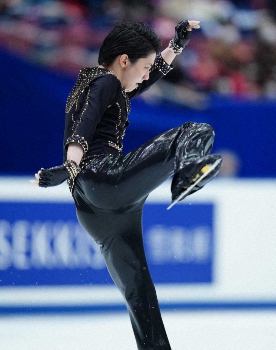
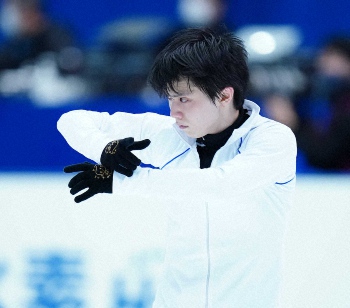
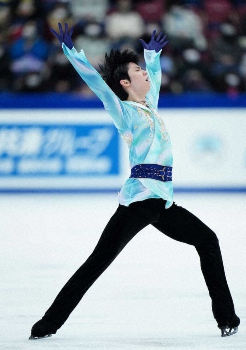
男子フリーが行われ、14年ソチ、18年平昌と五輪連覇の羽生結弦(ANA)は215・83点をマークし、合計319・36点で5年ぶり5度目の日本一に輝いた。演技後、フジテレビのインタビューでのコメントは以下の通り。
2014 Sochi and 2018 Pyeongchang Olympic gold medallist Yuzuru Hanyu (ANA) secured his 5th Japanese National Champion title with a score of 215.83 in the Free Skate and an overall score of 319.36. These are his comments in an interview with Fuji TV after the performance.
――演技を終えて
「ステップ4取りたかったなというのが正直な気持ちと、まあとりあえず、スピン丁寧に回れたんで良かったと思っています」
Q: (After the performance)
A: My honest feeling is that I wanted to get a Level 4 in the StSq but in any case I’m glad I thoroughly rotated my spins.
――あらためて演技を振り返って
「まず、ちゃんと客観視しながら、なんですかね、練習してきたことをしっかり信じて、体の感覚を信じて、やりきれたのは大きいと思いますし。なによりも昨日、ああいうプロだからこそなんですけど、初戦ということでちょっと力が入りすぎていた部分とかもあったので、昨日それを感じられて良かったなというのが率直な感想です」
Q: Your thoughts on your performance just then?
A: Firstly, while looking at it objectively… I think it’s significant that I was able to properly believe in the training I did and trust the feeling in my body. More than anything yesterday – though it was in part precisely because it was that type of program – there were parts in that first competition where I had exerted a bit too much power, so frankly, it’s good that I was able to feel that yesterday.
――4回転ループから入って、4回転サルコーでは高い加点がついた
「まあ、まずループジャンプというジャンプでまあ、流れを出すのってすごく難しいんですけど、まあ、それでも、流れを殺さないで、きれいに加点が付くループジャンプが跳べたっていうのが僕にとっても久しぶりですし、すごく心から良かったなと思える点です。サルコーとトーループに関しては、凄く自信を持ってやっているジャンプですし、長年一緒にやってくれているジャンプたちなんで、自信を持ってやりました」
Q: You began the program with a 4Lo and then a 4S and it scored you high marks
A: Well, firstly when it comes to the loop jump, it’s very difficult to get flow from that jump. For me, it’s been awhile since I’ve maintained the flow and completed the loop jump with positive GOE. It’s a point that I am very happy about. In regards to the Salchow and toe-loop, they are jumps I have a lot of confidence in and two jumps that have accompanied me for many years* so I had confidence and completed them.
*T/N: Here, his language sort of personifies his jumps as people/things who’ve been ‘doing’ skating together with him so we’ve tried to express that feeling through the translation
――どんな気持ちでこのプログラムを
「この曲の背景には、上杉謙信公がいらっしゃるんですけど。とにかく僕自身、競技することはやっぱり好きだし、闘うということの中から凄く、なんですかね、楽しみというか、集中の仕方だったりとか、その刺激はすごくまあ、たまらないものになっているんですけど。ただ、その中でも僕自身が、その、闘っても勝てなくなってきたり、また、苦しいというような、なんか苦悩に駆られたり。また、僕が1位になることで、誰かが2位になったり、3位になったり、犠牲があるということを感じながらやっていたので、なにか謙信公の闘いということに関しての価値観みたいなものに影響されているので。今、この世の中、闘わなきゃいけないことたくさんありますけれども、何かみなさんの中にちょっとした芯みたいなものが、闘う、向かっていく芯みたいなものが見えたら良かったなという風に思います」
Q: What kind of feelings have you put into this program?
A: The setting of this music features Lord Uesugi Kenshin.* In any case, I myself like competing, and in the act of competing itself, how to put it, the fun of it is in things like (figuring out) how to focus, and these kinds of exciting things are what I can’t get enough of. However, in all of that, (there are feelings like) fighting and still not winning, or (things) you can say are painful, like being consumed by anguish. Also, like when I come in first place, someone else will be 2nd or 3rd, and I am feeling that it is like there is a “sacrifice,” or a cost, so I am somewhat influenced by Lord Kenshin’s overall sense of values he held towards battle. Right now, in this world, there may be many things people have to fight against, so it would be nice if everyone could come to see something like a “core” or will within themselves as they head into battle (upon watching this program).
*T/N: Referring to 16th century/medieval Japanese warlord Uesugi Kenshin who ruled over part of northern Japan. The music for his free program this time is taken from a 1969 taiga genre (historical) drama called “Heaven and Earth” about Kenshin. In an earlier comment, Yuzuru pointed out that he resonates with Kenshin’s overall view of battle/competition as always having come with a cost, or a “sacrifice.” Earlier comment was translated here.
――世界選手権に向けて
「まあ、世界選手権、やれればなんですけどね。もちろん、とにかく、なによりも世界が早く平穏が戻って、僕自身も平穏な暮らしをしたいなというのが今の率直な思いです」
Q: Looking ahead to the World Championships
A: Well, if it will actually happen. Of course, in any case, my honest feeling right now is that I want the world to return to peace as soon as possible, and I want to live peacefully as well.
Part 2
男子フリーが行われ、14年ソチ、18年平昌と五輪連覇の羽生結弦(ANA)は215・83点をマークし、合計319・36点で5年ぶり5度目の日本一に輝いた。演技後、オンラインでの取材に応じた。
2014 Sochi and 2018 Pyeongchang Olympic gold medallist Yuzuru Hanyu (ANA) secured his 5th Japanese National Champion title after 5 years with a score of 215.83 in the Free Skate and an overall score of 319.36. After his performance, he answered some questions in an online interview.
―SP、フリーを終えて
「去年、だいぶ悔しかったんで、ちょっとリベンジできて良かったなって気持ちは少なからずあるんですけど、まあ、何より、やはり、う~ん、こういう状況の中でコーチを呼ぶのも、やはりコーチたちにも悪いですし、なにより、あの、もし1人でできるのであれば、世の中的に自分が胸張って試合に出られるのは、やはり、コーチを呼ぶべきじゃないと自分の中では決断したので。まあ、この状況で、こういういい演技ができたのはホントに良かったなと。それと、あとは、やはり、1人でやってきたとはいえ、ここまで支えてくださった方々がたくさんいらっしゃるので、その方々に感謝を申し上げたいです」
Q: (Your feelings) After ending the short & free programs
A: Last year, I was pretty frustrated, so I think it’s good I was able to get a little revenge, but, well, more than anything else, ultimately, hmm, in these kind of circumstances, [I felt] bad about calling [my] coach would be kind of bad*, so more than anything, um, if it’s something I can handle on my own, I internally decided that, given the current circumstances, I shouldn’t call my coach if I wanted to be able to go into the competition with confidence. Well, in these conditions, [I thought] being able to do a good performance like this was really good. And also, even though I have been working alone, I want to express my gratitude to the many who have supported me thus far.
*T/N: Our guess is that he is trying to express that he does not want to trouble his coaches during the current circumstances since he can handle it on his own.
――1人でやることの難しさは
「たとえば、前のシーズンに宇野選手が1人でグランプリを闘った試合だとか、そういったものもありましたし、そういった中で、やはり難しいんだろうなということを感じていました。また、僕自身もグランプリファイナルではコーチがちょっとトラブルがあったりとかして、ショートプログラムは1人でやって、で、うまくいかなかったっていう経験もありました。やはり、これだけ長い期間、1人でやるというのは相当、迷いも悩みもすごく増えましたけれども、1人でやっているとはいえ、どこかしらで、なにかしらでつながっているんだなということをあらためて、1人で練習していたからこそ感じたので。今回も遠くからいろんな力を、もちろん文章とか言葉とかでアドバイスをいただいたりとか、また、逆にそういった具体的なものだけじゃなくて、すごく遠くから力を送ってくださった方々もたくさんいらっしゃると思うので、まずはそこに感謝したいなって気持ちでいっぱいです」
Q: What are the difficulties of doing things (i.e. practice, training) alone?
A: For instance, last season, there was Uno-senshu who competed in the Grand Prix series by himself* and amidst all that I felt that certainly that must be difficult to do. Also, I myself had a little trouble [last year] at the Grand Prix Final with my coach*, and I had to do the short program alone, and I had the experience of that not going well. Ultimately, [this year], my doubts and worries have increased a lot by doing everything all by myself for this long period of time, but although I’m doing it alone, it’s precisely because of the fact that I’ve been training alone that I was again able to feel that somehow, somewhere I’m connected [to others]. This time too, [I’ve received] support from afar, and of course this includes things like messages and words I’ve received, and conversely, not just these kinds of tangible things but, I think there are also many who are sending me support from very far away, so above all I very much want to express my gratitude to them.
*T/N: Referring to skater Shoma Uno who competed without a coach for part of last season.
**T/N: Referring to how in GPF 2019, Coach Ghislain was to be accompanying Yuzuru but ended up getting delayed due to his passport getting stolen.
――フリーでの収穫、手応えは
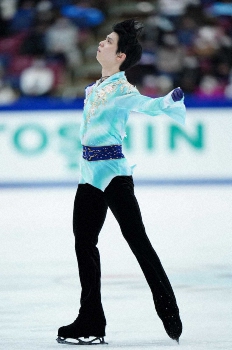
「まず、まあ、自分自身、このプログラムにすごく思い入れがあって。曲を聞けば感情はすごく入りますし。もちろん、振りの1つ1つにいろんな意味を込めています。ただ、その中でも、やっぱりジャンプも完成させないと、プログラムの一連の流れとして伝わるものが伝わらなくなってしまうと思うので。まあ、初戦だったとはいえ、自分が伝えたいこととか、このプログラムで見せたいことっていうのは、ジャンプが途切れなかったという意味でも少しは見せられたのかなと思います」
Q: (With your efforts being rewarded) in the free program, what is your response?A: First, well, in this program I myself have great attachment to it. If I listen to the music I get very emotional. Of course, in each individual movement there are various meanings imbued into them. However, in all of that, if the jumps are not completed as well, I think what I want to convey with the program as a whole with its flow does not come across. So, although it was the first competition [of the season], with regard to things like what I wanted to convey, I think I was able to show a little of what I wanted to in this program, as the jumps were not interrupted.
Part 3
――このプログラムで伝えたかったこと
「自分自身、去年のシーズンで全日本のこともありましたし、グランプリファイナルのことももあったんですけど。なかなか、自分が成長してないんじゃないかなとか。あとは、だんだん闘えなくなっているんじゃないかなとか、そういった思いがあったりとかしてて。闘うの疲れたなって思ったんですよ、一瞬。辞めることはたぶんいつでもできるし。それを望んでいない人もたぶん、応援してくださる方々はたくさんいらっしゃると思うんですけど。ただ、そういった闘いの中で、試合の中で得られる達成感とか、試合があるからこそ、できる、乗り越えることができる苦しみとか、そういったものが、やっぱり好きなんだなってあらためて思っていたのと。あと、上杉謙信公の話なんですけど、まあ、彼の中にある、闘いへの考え方だったり、だけど、そこには美学というか、あとは規制 犠牲*があることへの葛藤だったり、そういったことから最終的に出家されていると思うんですけど。そういった、なんか悟りの境地のようなところまでいった、上杉謙信公の価値観とかとかとちょっとの似ているのかなと。そういったものをリンクさせながら、滑らせていただきました」
*appears to be a typo, meant to be 犠牲
Q: What did you want to convey with this program?
A: For me, something happened at last year’s Japanese Nationals and also the Grand Prix Finals. I felt like I wasn’t really growing, that I was slowly becoming unable to fight, those sort of thoughts were in my head. For a moment, I thought that I had become tired of competing, and I could probably give up at any point, though I think there are probably many people supporting me who don’t want that to happen. But within that fight, I realised once again that I love the feeling of accomplishment you get in a competition, the feeling of being able to do things, overcoming things, the suffering of being able to overcome hardships, etc, those feelings that exist because of competitions. Also, bringing up Uesugi Kenshin*, well, things like his perspective on battle, within that there was (a sense of) aesthetics you could say. Also, he had conflict with the fact (there were always) sacrifices that resulted from fighting, and so I think ultimately he ended up becoming a monk. So in that way, like reaching a state of enlightenment or understanding, I think maybe something like Lord Kenshin’s sense of values is kind of similar (to mine). I tried to skate while linking these kinds of things together with my performance.
*t/n: Referring to 16th century/medieval Japanese warlord Uesugi Kenshin who ruled over part of northern Japan. The music for Yuzuru’s free program this time is taken from a 1969 taiga genre (historical) drama called “Heaven and Earth” that is about Kenshin’s life. Kenshin was educated at a temple for some time in his youth and for the rest of his life was regarded as an honorable warrior, known for his religious devotion to the Buddhist god of war, Bishamonten. In an earlier comment, Yuzuru pointed out that he resonates with Kenshin’s overall view of battle/competition as always having come with a cost, or a “sacrifice.” Earlier comment was translated here: https://twitter.com/shinjistarxx/status/1342787528550723585
――振り付けのこだわり
「全部です。へへへへへへ。どれ1つ欠けても、このプログラムはたぶん、このプログラムはっていうか、まあ、ここ最近、ここ5、6年のシーズンのプログラムに関しては特に、プログラムとして成り立たないと思うので。なによりもジャンプを力なくシームレスに跳べたというのが、一番表現として完成できた良かったとことだと思っています」
Q: What are the key details you’re mindful of in your choreography?
A: All of it. Hehehehe. I think if any one detail is missed this program will probably… not just this program, but especially the programs in the last 5 or 6 seasons, probably would not be complete. More than anything, the fact I was able to jump seamlessly without exerting too much force was the best part in being able to complete the expression [of the program].
――連続性は大事な柱か
「そうですね。だからこそ、昨日みたいな演技に関しては、ちょっと荒削りだと思いますし。やっぱり見せたい気持ちはもちろんあるんですけど、ただ、その中で“ジャンプ跳べたぜ、やっほ~い”みたいな、なんか“うぇ~い”みたいな感じじゃなくて、もっとなんかスマートに、たぶんロビーだったら、もっとスマートに、イギリスのロックなので、なんか、なんていえばいいんだろう。国とかそういうんじゃなくて、もっと余裕があるロックだと思うんですよ。それがまだ表現できていないかなと昨日は思ったんで。もっと余裕のある、いかしたものにしたいなっていうのはちょっと、昨日を終えての反省点です」
Q: Is the sense of continuity an important pillar [in your programs]?
A: Yes it is. Therefore, I think a performance like yesterday’s [short program] is still a little unrefined. There are of course emotions I’d like to show, but within that, it’s not the feeling of ‘yeah I jumped that, yahoo!’ or ‘Eyyy~’ but more…something smarter – if it was Robbie [Williams], he’d express it in a smarter way, because it’s English rock… um, how do I put this. It’s not really about a particular country’s [rock style] but I think it’s a kind of rock with more room to play with. Yesterday I thought I am probably not able to express that yet, but reflecting on it last night, I want to do a performance with more freedom and make it feel more alive.
――来年はどんな姿に
「とにかく、今回1人で長い間トレーニングしてきて、まあショートはもちろん課題はありましたし、はっきり言って完璧だったなと言える演技ではないですけど。特にきょうに関しては、すごく安心して、自分自身も安心して、また、見ている方々も安心して見られるような、自分本来の演技ができていると思うので。トレーニングしてきたことのやり方だったり、そういったものは間違いなかった。今の体に合っているトレーニングの仕方だったり、成長の仕方ができていると思うので、それをまたさらにブラッシュアップして、またもっと難しいジャンプに挑みながら、ケガもなく過ごしていけたらいいなと思います」
Q: How do you want next year to take shape? A: In any case, this time I have trained for a long time by myself and well, there were of course problems in the Short Program and honestly speaking, they are not performances I can call perfect. In particular, in regards to today [Free Program], I feel very reassured, in myself and also I think those watching can feel reassured that, as they were able to see, I can do an original performance. That the way I trained was right. I think I’ve found a training method that is suitable for my current body condition, one that helps me grow, so from here on I’d like to keep refining it further and I hope that I can continue [training] without injuries while challenging harder jumps.
Part 4
――フィニッシュから数秒、何が見えていた。
「なんだろう。特に何を考えていたわけじゃないんですけど。ただ、あの、なんていうんですかね、すごくいろんな力をもらえたと思いますし、まあ、闘い抜けたなっていう風に思って、そこにスって立っていたっていう感じですかね。別に何かを見ていたわけじゃなくて、むしろ自分が違うところから見ていた感覚だったので」
Q: At the end of your program for a few seconds, what did you see?
A: What was it? It wasn’t as though I was thinking about anything in particular. It’s just…how do I put this… I felt like I had received a huge amount of various kinds of energies, and it was like I had finally come out of this battle, so I stood there afterwards – that sort of feeling. It wasn’t really like I was looking at something but rather, it felt like I was watching from a different place.
――スタートの振り付けに込められた意味。
「なんかあの、まあシェイの、なんていうんですかね、ざっくりとしたイメージなんですけど、なんか甲冑らしいんですよ、そもそも。(身振り手振りをまじえ)なんか鎧がここに合って、ここに兜があるみたいなイメージでやっていたみたいなんですけど。僕の中ではあの、“天と地と”って“と”で終わっていて、もちろん大河ドラマのタイトルをそのまま使わせていただいたんですけど、自分の中では、天と地と、人(じん)、人(ひと)、もしくは自分みたいなイメージが、羽生結弦みたいなイメージがあって。で、その、(身振り手振りをまじえ)ここってたぶん天と地の間だと思うんですよ、で、そこにオレがいるんだぞっていうようなイメージで自分としては意味をつけてやっています」
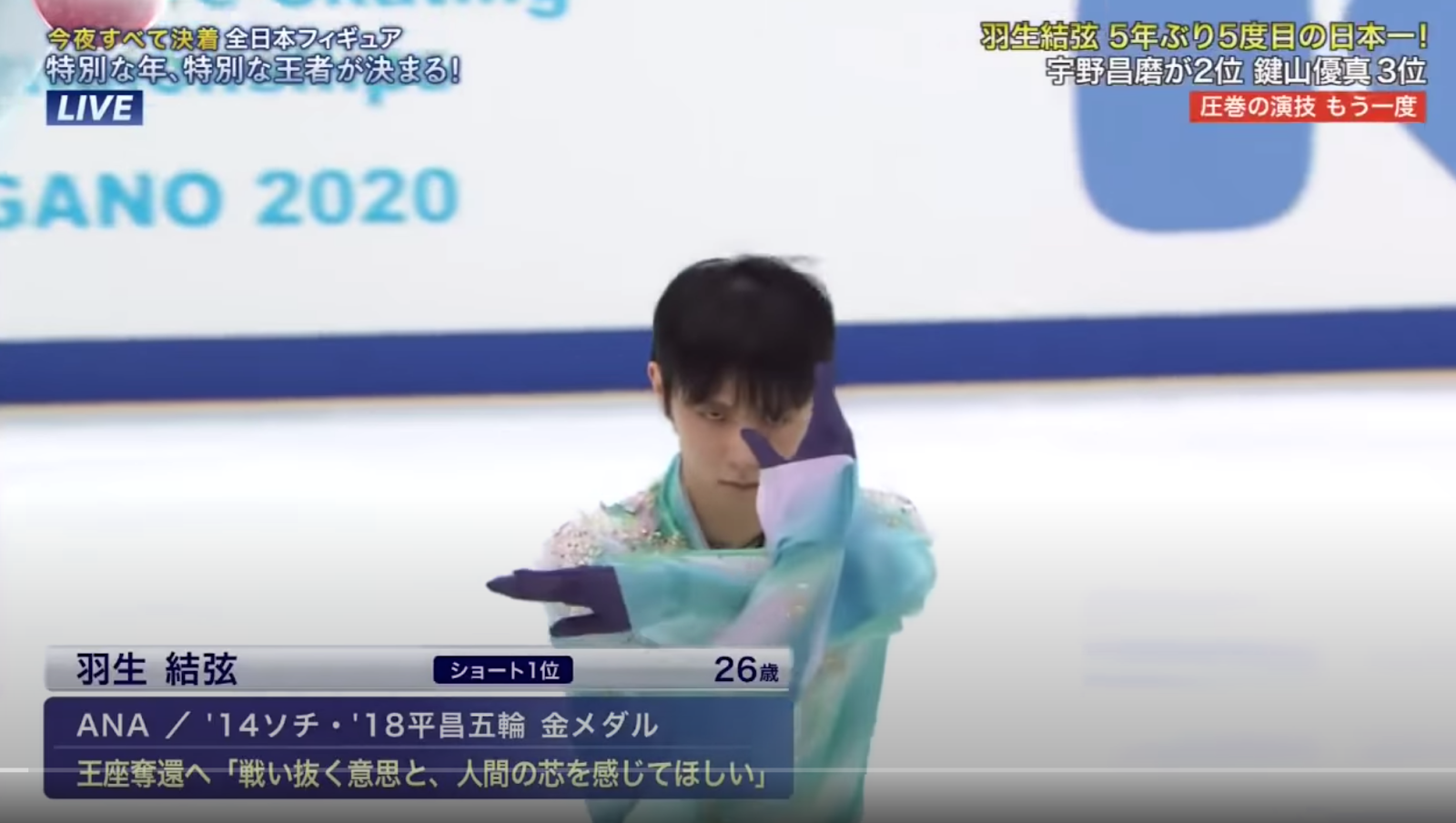
Q: What is the meaning behind the choreography of the beginning?
A: Well, it’s Shae’s [idea]… how should I put it, it’s kind of like a rough image but, I heard that it is an image meant to be like a warrior’s armor and helmet, originally. (Gesturing with his body and hands) Like, [she had] an image that here would be the armor, and here would be like a helmet. In my mind, “Heaven, and Earth, and”* ends with [the word] “and,” which of course, I’m using from the title of the taiga (historical) drama as is, but in my mind, I had an image of heaven and earth, and humanity, or a person, perhaps myself, like an image that it’s “Yuzuru Hanyu.” I think (with gestures) that in this space, it’s maybe in between heaven and the earth, then (in that space) I meant for it to be an image of as if I am there.
*T/N: Referring to the title of his program, 天と地と (“Heaven and Earth, and”), which is taken from a 1960s taiga (historical) drama of the same name.
――この曲は琵琶の音をうまく使っている。
「まあ、あの、う~ん、まあ最初の琵琶はそのまんま、曲そのまんまであった琵琶なので。まあ、曲の流れとして、なんか闘いにいくぞというか、ある意味、決意を込めた、そうですね、決意を込めた、闘いに行くための準備みたいな感じの決意に満ちている感覚です。で、最後の最後にイナバウアー終わった後のスピンやりながらの琵琶に関しては、あそこはそもそもある音じゃなくて、あの琵琶の音をちょっと違うところから持ってきて、違う曲と重ねて、オリジナルなものにしているんですよ。あそこはなんかコレオステップの時に、もう闘いたくないんだけど、守らなくてはいけないって意味で闘いつつ、で、最後、謙信公が出家する時に、自分の半生を思い描いているようなイメージで、そこに琵琶を重ねてみました」。
Q: This song makes good use of the sound of the biwa. (Japanese lute)
A: Well…hmmm, the biwa sound in the beginning of the song is taken as it was from the original piece. In terms of the flow of the song, it’s full of determination, like we’re going to fight, or filled with a sense of preparing to go into battle. And at the end, after the Ina Bauer, the biwa sound while spinning is not a sound that exists in the first place, but a sound that I brought from a different piece of music* and layered it with a different song to make it original. There during the ChSq, the image is of [Kenshin] who doesn’t want to fight anymore, but that he must continue to fight in order to protect. In the end, when Lord Kenshin is entering his priesthood, he is reflecting on the half of his life thus far, so with that image in mind, I tried to overlay the sound of the biwa there.
*T/N: Different song or different part from the same song, it’s not clear

Image credit: https://blog.promolta.com/4-japanese-instruments/
――琴は。
「日本風なより日本風に持って行きたかったので。あそこは自分の中では信玄公と闘った後に、川中島で闘った後に、霧に包まれて離ればなれになって、自分と向き合っている時間みたいな感じなんで。琴の音とかで自分と向き合いながら、自分の鼓動が鳴っているのとか、血が流れている感覚とか、スっと殺気が落ちていく感じが感じられたらいいなと思います。このプログラムの選曲自体は自分がやっているんで。選曲、編集もかなりバージョン作ってやったので、音自体にもすごい込められていますし。ただ、僕は音楽家ではないので、やっぱりスケートと合わせた上でのものになっているのかなという思いはあります」。
Q: How about the koto? (Japanese harp-like instrument)
A: I wanted to make the program even more ‘Japonesque’. At that part, in my mind, the feeling is meant to be like after [Kenshin] has fought Lord Shingen*; it is after their fight at Kawanakajima, and they are enveloped by fog and then separated (from one another’s view) so they are (left to) face their own selves. I thought it would be nice to have the sound of the biwa to feel that sense of facing yourself, where your own heartbeat is ringing in your ears, and maybe also that sensation of blood flowing, and then suddenly that sense of bloodlust and the need to kill subsides. For this program, I chose the piece myself. In picking the music, I made quite many versions editing it too, including the sound itself. However, I’m not a musician, so I do wonder if it matches the skating.
*t/n: Referring to another 16th century Japanese warlord, Takeda Shingen, who was famously known for having a long-standing rivalry with Kenshin. The two clashed many times at the site of Kawanakajima, which is located in present-day Nagano (incidentally close to Nagano Big Hat, the arena where this competition was held).

Image credit: https://en.wikipedia.org/wiki/Koto_(instrument)
――この試合は競技人生にどんな意味があるか
「やはり、試合が始まった時に言っていたことが全てかなと。僕自身の望みというか、うん、すごく個人的な意見なので、それを貫いていいのかなっていう葛藤が今でもあるんですけど。個人的にもし、世界選手権があるのであれば、そこに少しでも近づいておかないと、今後に向けて難しいなという思いがすごくあったので。まあ、その今のコロナ禍という暗い世の中での自分自身がつかみ取りたい光に対して手を伸ばしたっていうような感じでした」。
Q: What meaning does this competition hold in your competitive career?
A: I think what I said when the competition first started was everything. Should I call it my own desire, um, it’s a very personal opinion, so even now I’m still conflicted whether I can stick with that. It’s very personal, and if the World Championships happen, if I don’t get closer to it in advance a bit, I have the impression that it’d become difficult later. So, um, it felt like reaching for the light that I want to grasp for in the dark world that is the current COVID19 pandemic.
――長野でリスタート。
「もちろん、いいイメージがありつつも、逆にいいイメージがあるからこそ、それを壊してしまわないかっていう怖さと、それにとらわれてしまわないかという怖さみたいなものももちろんあったんですけど。ここまで競技人生長く続けてきて、やっとなんですよ。やっと技術的にとか技術レベルじゃなくて、テニスのフェデラーさんとか、もちろんスケートの小平さんとかもそうですけど、なんかその対人のスポーツでメンタルを使っているというか、経験を使えているの凄いなって思って。フィギュアスケートって使いづらいなって正直思っていたんですよ。ベテランになっても、それをうまくいかせない。でも、やっとそれが生かせるようになってきたなっていうのが今回の試合でした」
Q: What do you think about restarting at Nagano this time?
A: Of course, even though I have a good impression [of the venue], on the contrary, exactly because I have a good impression of it, I was afraid of breaking that, and feared that I would be caught up in it. I’ve had a long competitive career until now, finally. Rather than the techniques or the technical level, it’s so cool to be able to use your mentality, or your experiences in interpersonal sports like Federer in tennis and of course, Kodaira in [speed] skating. I honestly think it’s hard to make use of those things in figure skating. Even when I’ve become a veteran, I can’t utilize them well. But I’ve finally been able to make it work at this competition.